Imagine a creature that never grows up, can regenerate limbs without scars, and has a sort of slimy, alien-like cuteness. Sounds like a critter you’d like to meet, right? Ambystoma mexicanum, the axolotl, lives all over the world in aquaria but their only wild habitat is under severe threat. Chances are that neither of us will ever meet a wild one and that is a shame.
This fascinating amphibian, through a quirk of evolution, is neotenous. This means that it never really leaves the tadpole stage. Where most salamanders and frogs will leave behind external gills and develop lungs to breathe on land, the axolotl decides it is perfectly happy and stays put underwater with beautiful gill fans collecting the oxygen it needs.
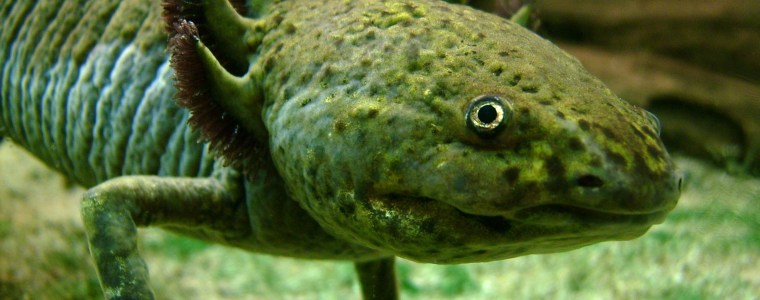
This axolotl is a strong, independent amphibian that don’t need no lungs or terrestrial environment. Image Creddit: Faldrian
Not only does this incredible creature never grow up, but it can also totally regenerate lost limbs. This makes it a valuable model organism for scientists to study in the lab. The exact mechanism behind this regeneration is still being investigated, in hopes that one day a technique for human regeneration will be discovered, but there are some interesting findings that have already come out.
The generally accepted theory was that when a limb was cut off, the axolotl would send a signal to the stump that would turn the cells at the end to pluripotent stem cells. These cells would be able to duplicate and grow into any tissue and are similar to the cells found in embryos. Recent research out of Germany, however, showed that the cells at the end of the stump don’t revert to a totally embryonic state. They are still able to grow into tissues, but only certain kinds of tissue. The part of the stump that was muscle remembers that it needs to grow muscle, whereas the part that was nerve remembers that it needs to grow nerve.
Step-by-step limb axolotl limb regeneration. From the lab of James Monaghan
Lake Xochimilco in Mexico City is the only place in the world the axolotl can be found in the wild, making them critically endangered according to the IUCN. They used to live in another nearby lake named Chalco, until that was drained for fear of flooding. For hundreds of years the axolotl was abundant enough to be a staple in the diet of locals, but now they are nearly impossible to find. In a 2002-2003 survey where over 1800 nets were cast over the entirety of Lake Xochimilco, scientists could only find 42 of the little amphibians. The first thing to understand about axolotl decline is that calling Xochimilco a lake is kind of a stretch.
“Lake” Xochimilco. Basically a network of canals surrounded by farms.
This small, restricted environment is a closed system, meaning it does not drain anywhere. It is also surrounded by farms which provide much of the food needed to feed Mexico City. Agricultural runoff from the farms and pollution from the nearby megacity accumulate, causing severe damage to the ecosystem and endangering the few axolotls that remain.
The axolotl is an incredible animal at severe risk of extinction in the wild. It is the Peter Pan of the animal kingdom, refusing to grow up and hiding from hooks. It’s most amazing power, regeneration, is still being studied and one day may prove the key to human limb regrowth. For all this and more, the axolotl is most definitely an interesting thing.
Some captive axolotls, like this one, are leucistic (a condition similar to albinism that causes animals to become white). Aren’t they cute? Image by Henry Mühlpfordt
For more information on this beautiful creature, follow the links below
Weird Creatures with Nick Baker did a great documentary on axolotls which is available on Youtube.
The IUCN has put the axolotl on its red list of endangered animals
A BIG thank you to Kiri and Stuart from the Avon Bat Group for coming to Enter the Bat Cave and showing off the beautiful little animals they have in their care. Everyone really enjoyed getting up close and personal with an animal that is so rarely seen by the general public.
Stuart and Kiri with their bats and Bish the Bear from Bristol Improv Theatre
If you are interested in supporting Avon Bat Group, adopting a bat, or just want to know more about your new favourite mammal; you can find more information on their website at www.avonbatgroup.org.uk, or like their facebook page for regular updates. We hope that after all you learnt during the evening, you can really appreciate how important their work is.
Thank you to everyone who came last night, we hope you had a great evening! Keep an eye on the website for more information about our next event and for another of Antony’s excellent infographics about Enter the Bat Cave.
“It is important that legislation keeps pace with scientific progress.” Robert Winston
A little breakthrough for medical research happened last week, not in the lab, but in the House of Commons. By a huge majority the commons voted to allow a new IVF technique called mitochondrial donation, which can be used to stop babies from inheriting mitochondrial DNA diseases. Most mitochondrial DNA diseases are passed from mother to child and can cause debilitating symptoms such as muscle weakness, diabetes, heart problems, movement problems, epilepsy or even death. With a 1 in 4,000 prevalence, apparently Charles Darwin even had a form of the disease, which caused continuous vomiting and terrible headaches.
Image Credit: Michiel1972
Even though scientists, politicians and most of the public seem to be in a rare state of agreement over this topic, it has of course had its opponents. Before we take a look at the arguments of those who worry about its safety, let’s first take a tentative dip into fertilisation to find out how this new technique works.
The mitochondria are the power house of cells in the body and provide energy to carry out different cellular function. Each mitochondria actually has its own DNA, separate from the DNA that makes you who you are, which it uses for controlling its own function and energy production. When this mitochondrial DNA becomes faulty, usually a trait passed down from the mother, the mitochondria could malfunction, causing all sort of trouble.
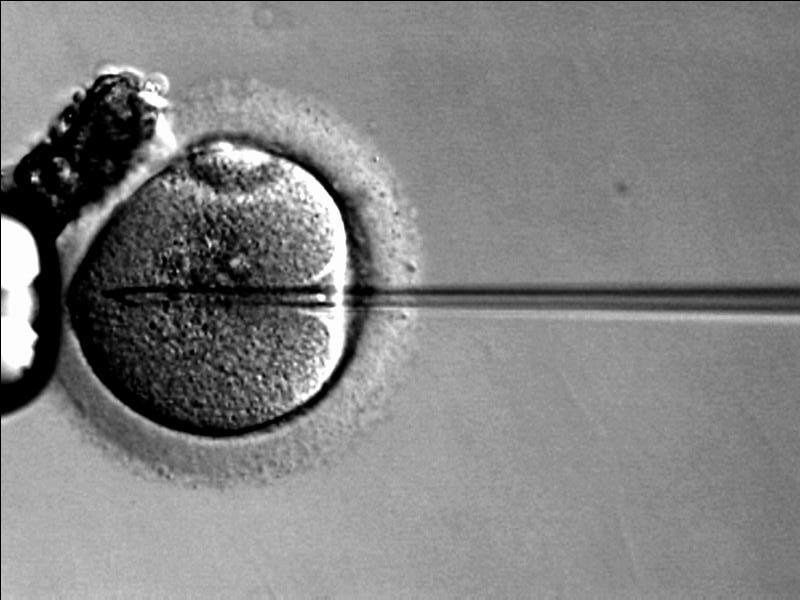
This new technique takes the nuclear DNA, the DNA that really makes you you, from a patient’s egg and places it into an egg from a healthy donor which has already had its own nuclear DNA removed. The healthy egg is then inserted back into the mother to develop. As the donor egg contains healthy mitochondrial DNA, you’ve now got yourself a healthy little baby growing.
Image Credit: 44444 UAE
The main concerns that have been expressed are worries over safety, and the ever slippery slippery slope towards designer babies. Personally, this is something I have never understood. In today’s health and safety dominated, slightly science-sceptical, government a discovery that has gained so much media interest would never have been allowed to be used by the public without endless supporting evidence and safeguards. As to those who see the children as three-parent babies, technically only 0.1% of the DNA is not from the parents so perhaps they should be called 2.0001 parent babies. I agree it doesn’t quite have the same ring to it, though.
It’s been unusual to see such major media coverage for a subject that could be viewed as too complicated for the public to get behind. Hopefully this is a welcome look into a future where new scientific breakthroughs are more broadly accepted.
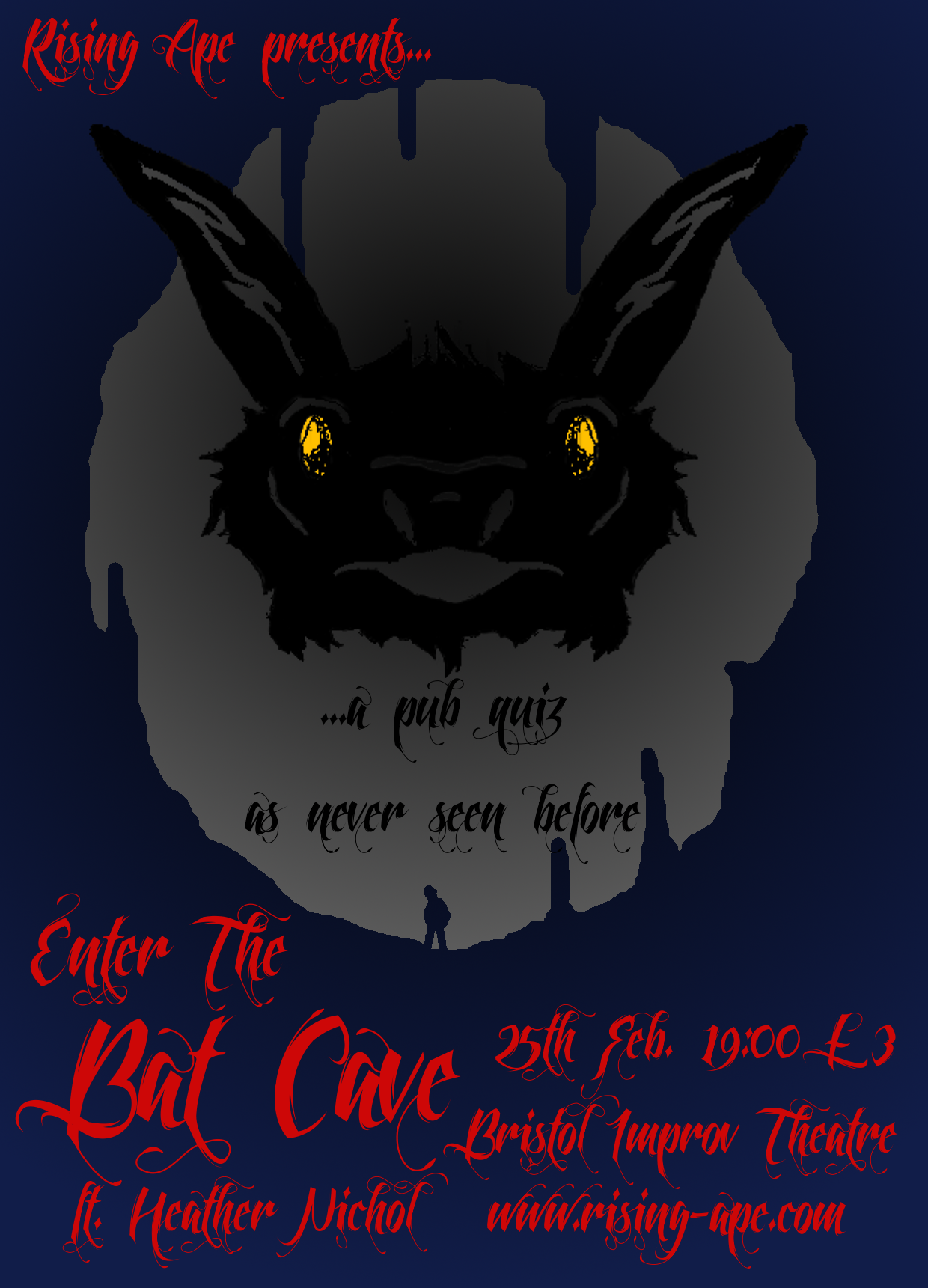
Plunge into the depths of one of Bristol’s darkest bat caves – a place where the echoes of lost souls linger and haunt the footsteps of all those who enter. Fleeting silhouettes of winged creatures lay claim to these walls, and the stench of guano weighs heavy on the air…
OK, so in reality we just turned off all the lights in the Bristol Improv Theatre, and the Rising Ape team forgot to wash, but bear with us for a moment. Rising Ape returns with a night of bat-themed madness. Bring a team and stretch your wings in the quiz. You better know your long ears from your short snouts, your Dracula from your Orlok, and your Slazenger from your Gunn & Moore. But as bat researchers stuck in a terrifying cave, we don’t expect you to just sit there all night. Be prepared to get up close and personal, untangling these creature’s fascinating secrets for yourselves with help from some special guests. To conclude the night’s eerie proceedings, real-life Batwoman Heather Nichol will share her personal journey into the world of bats.
More about Heather Nichol: Heather has been involved in bat conservation for the past 5 years. She was first introduced to the world of bats during her undergraduate degree at the University of Leeds, and has since taken part in various conservation projects, including a project that discovered the first know breeding colony of Alcathoe bats in the UK. Heather has just completed a Masters by Research at the University of Bristol studying one of the hot topics in ecology at moment: bat fatalities in wind farms in Britain.
“I have been trying to point out that in our lives chance may have an astonishing influence and, if I may offer advice to the young laboratory worker, it would be this – never to neglect an extraordinary appearance or happening.” Alexander Fleming
Nearly 30 years after the discovery of the last antibiotic, a new bacterial culturing technique may end the drought of new medicines.
Scientists have discovered 25 new antibiotics using a new lab technique which will hopefully discover many more. One of these new antibiotics, called teixobactin, has shown promising results in treating gram-positive bacteria such as MRSA and bacterial tuberculosis. The researchers are also hoping that harmful bacteria won’t gain resistance to teixobactin for at least another 30 years, as it uses an unusual multi-pronged attack that will be much harder for any germs to combat. It hasn’t been trialled on humans yet, but the test mice have responded very well. If human trials also go well, it may finally be possible to treat some of the nasty multi-drug resistant superbugs that have been troubling doctors for many years.
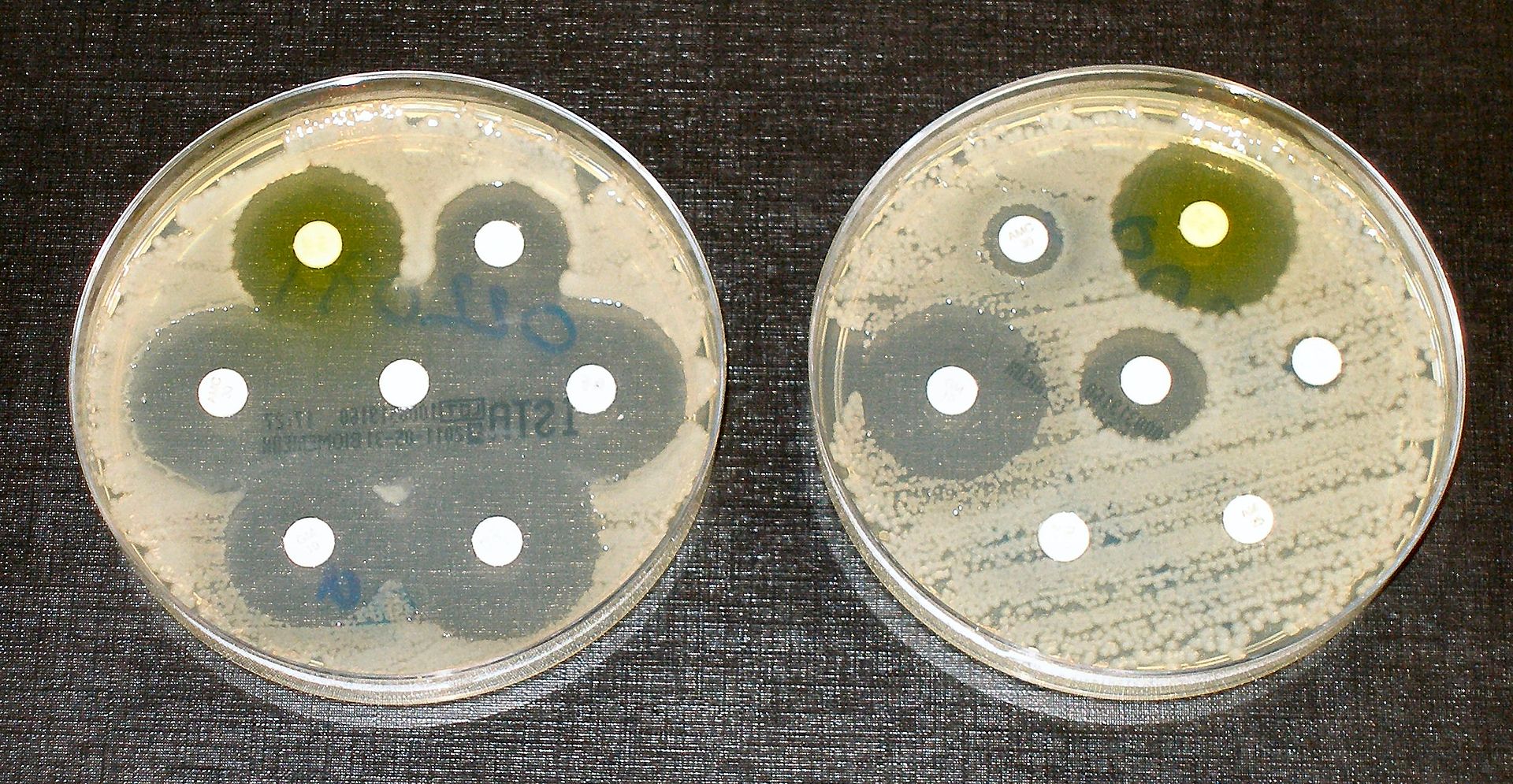
Although it’s fantastic news that a new antibiotic has been discovered, the main
Traditional testing of antibiotics in vitro. Image credit: Graham Beards
story here is the new technique. Traditionally, bacteria are grown on agar plates in a lab, but this new technique uses soil as the culture medium where bacteria feel at home and are happy to grow. This may not sound as interesting as a new superbug-killing drug, but teixobactin comes from the 99% of bacteria that have never been cultured, and without this technique it would never have been! This 99% is an untapped treasure trove that researchers were unable to culture in a lab environment until now, and this unexplored group could hold the secret to treating any number of infectious diseases.
If these new antibiotics are everything that they appear to be then it’s an easy bet that the team from Northeastern University in Boston, Massachusetts, will be up for a Nobel Prize. Perhaps they will have a more positive message than Alexander Fleming, who in his Nobel Prize speech for the discovery of Penicillin, couldn’t resist presciently warning everyone of the dangers of over use.
It has all come just in the nick of time as well, as we were all starting to prepare for the worst. A horrid future of antibiotics slowly becoming useless as more and more bacteria became resistant to them. Hopefully, that is no longer the case.
In this episode of Rising Ape Speaks we discuss how draining almost all the water out of fish’s pool has illustrated that evolution is by no means a closed book.
This leads on to James confessing his childhood spent dreaming up unethical experiments, and how the possible explanation for Antony‘s gymless body may lie with his cheese-eating father. Later on, creationists get it in the ear. Yes, evolution may be nature’s way, but Rising Ape Speaks will always stick to its timeless winning formula!
Paywall free article about landlubbing Birchir fish here.
Welcome to a night of knowledge, excitement, exploration and (ethanolic) excess.* (*Please drink reasonably, but feel free to consume knowledge and excitement in rampant abundance.) You are officially invited to join colony #001, the first human settlement on Mars.
The first task our crew will be subjected to is an Earth-style pub quiz on the topic of Mars. Indeed, a strange start to the first day on Mars. Nevertheless, you better wipe the dust off those Mars mission background briefings ESA mailed you a couple of months ago, and get studying. Your quiz team, or Tactical Task Force, will be limited to a maximum of 4 colonists. But overall scores will be boosted with the second part of the evening—the activity. The nature of the activity is TOP SECRET, as exposing this information may lead some colonists to practice or buy ergogenic aids. Finally, once the scores have been collated and the prizes distributed to our most knowledgeable and dextrous of colonists, we will receive a 20 minute briefing from our crew’s resident astrobiologist Michaela Musilova. Michaela will talk us through exactly where the current academic thinking is on Martian life. Following this briefing we will have a question and answer session so we can all pick Michaela’s impressive brains some more.
To book tickets for this event follow the Eventbrite button in the sidebar. Alternatively, you can buy tickets at the door, subject to availability. You can even tell us you’re attending, and say hello, through the Book of the Face.
More about Michaela Musilova: Michaela is currently working as a PhD research student at the University of Bristol. Her dream is to be part of future space exploration missions searching for extraterrestrial life. Michaela Musilova’s primary interest is in extremophiles, organisms that live in extreme environments, such as deserts, deep sea vents and glaciers. They are significant to industry and medical research, since their enzymes are stable and functional over a wide range of physical/chemical conditions. Similar life could potentially be found in analogous extreme conditions on other planets and moons. Thus, they are very important to astrobiology – a multidisciplinary science exploring the origin and distribution of life in the Universe. During her studies, Michaela pursued other astrobiology related research, including: working as a research fellow at the NASA Jet Propulsion Laboratory (JPL); simulating lunar and planetary surfaces through NASA and the UK Space Agency’s MoonLite project (funded by a Nuffield Foundation grant); searching for exoplanets at the University of London Observatory; and being selected as an analogue astronaut at the Mars Desert Research Station, USA.
“When hell is full, the dead shall walk the Earth.”
(Feature Image, Original Credit: Gianluca Ramalho Misiti)
Are zombies real? To many people, the idea of a horde of ravenous zombies tearing through the nation is a grotesque and distant fiction; something reserved for the big screen or the comic strip. Scenes of overrun cities and desolated countryside communities don’t worry these people. But worry they should.
What is a zombie? Haitian Voodoo folklore dictates they are cursed souls, raised from the dead by witchcraft. But this explanation holds no blood. A zombie is a creature which can be explained, at least theoretically, by science. A zombie is a sick person, infected with a horrible pathogen. Lots of real parasites make nasty changes in the behaviour of their hosts, making them act in weird and wounding ways, to increase the chances of the parasite spreading. This could be a virus, as is seen in many movies, it could even be a bacterial or fungal agent.
(Image Credit: Gianluca Ramalho Misiti)
Could these pathologies infect and change a human into a recognisable yet horribly distinct creature? A change which would dull the brain and leave the host unable to resist the visceral urges plaguing them: the urge to kill – the urge to eat. As we project our darkest fears, we may, in cynical conclusion, bestow the label of zombie on these transmogrified souls. For if something looks, acts and bites like a zombie, then what matters the name? Known as the infected, the walking dead, carriers, biters, abominations or masticating madams; the name will matter very little when you are barricading your doors, praying the torrential horde passes through your streets without tasting the terror which oozes from your trembling skin.
Let’s explore some of the more plausible pathologies which could, under the right (or, more accurately, wrong) circumstances, confer the characteristics of the zombie on an unwitting victim; turning them into Patient Zero, the genesis of the pandemic. What follows is science, it is real, and it is scary – scarier than anything you could find dwelling in the recesses of Stephen King’s macabre mind. This is zombie science: check your pulse and delve in.
An example of a modifying microbe is the protozoan parasite Toxoplasma gondii. Toxoplasma is a strange creature with a strange lifecycle. Although it can infect, live and asexually reproduce in almost all warm-blooded animals, it can only sexually reproduce inside the intestines of cats. (Talk about being picky. As far as sexual fetishes go this one is pretty out-there, or, maybe, in-there is more apt?) The life of Toxoplasma has one central theme: get into a cat’s guts and reproduce. Through the wonders of adaptive evolution, it has developed a subtle and sinister way of getting inside the intestines of cats: by altering the behaviour of infected rodents. Following infection, via contact with infected cat feces or meat, the rodent who is normally very scared of cats and repelled by cat pheromones becomes incredibly brave, daring and actually attracted to the smell of cats. This change in behaviour leads to an increased likelihood of the rodent being eaten by its natural predator; and if an infected rodent gets eaten by a cat then Toxoplasma also gets eaten, meaning it can finally make the parents proud by carrying out its life’s ambition of romping in Mr Whiskerson’s intestines.
One of the postulated ways in which Toxoplasma is thought to bring about this change in behaviour is through the development of parasitic cysts in the brains of rodents. One paper found almost double the number of cysts in the amygdala, a centre of the brain involved in mediating fear of predators, compared to other brain regions.
Toxoplasma life cycle (Image Credit: Ladyofhats)
I know what you are thinking: this little anecdote about Toxoplasma isn’t connected with zombies at all; it’s just cat eat rat. But it is connected. It’s a parasitic organism causing a behavioural change in a host in order to maximise the survival of the parasite. And Toxoplasma doesn’t just infect rodents, it infects us too. In fact, according to research by staff at Stanford University, up to a third of the world’s population is infected with Toxoplasma. Although this is mostly not a serious problem, recent research has shown a possible causal link between Toxoplasma infection and a range of mental health problems such schizophrenia and ADHD.
We can see from the tale of Toxoplasma that parasites can alter the behaviour of their hosts in order to benefit themselves. However, to make a zombie requires some specific alterations. The movie Quarantine – the American version of the Spanish horror REC – makes use of the rabies virus as the zombie pathogen. A rabies virus which has been genetically engineered to be extremely fast acting. The wild-type rabies virus itself has some seriously scary symptoms which are designed, through evolution, to facilitate the virus’ transmission. Infected animals start out with a fever and end with cerebral and cranial nerve dysfunction, incoordination, weakness, seizures, difficulty breathing and swallowing, excessive salivation, abnormal behaviour and aggression. These symptoms are tailored to make the host transmit the virus. As the virus is transmitted through the saliva of an infected individual, excessive saliva production and in increase in aggression leads to more bites – more bites means more infections. When the virus is passed onto a new host it works its way from the site of the bite, along the nerves, to the hosts brain, where it goes about creating the zombie-like state in the new victim.
It should be mentioned, however, that the incubation period (the time it takes for rabies’ symptoms to manifest in the host) is relatively long – between 2 and 12 weeks. Furthermore, in humans, rabies tends not to cause the hyper-aggressive behaviour seen in animals, with almost all human-human infections due to organ transplants, and not bites. Therefore, in the movies, generally the virus must be mutated in some way to produce a zombie, becoming super-fast acting or making the host hyper-aggressive such as in 28 Days Later. (Incidentally, the virus in 28 Days Later, called ‘Rage’, was a mutated version of Ebola virus, created by scientists trying to discover the cause of aggression in the brain.) This doesn’t mean that rabies isn’t a potential pathogen which could cause a zombie-like human, it just means that the wild-type rabies virus does not make us into frothing madmen (yet).
We’ve seen how mighty mice and demonic dogs have their pathogenic routes in science, but what about the zombie cow? A few years back the bovine spongiform encephalopathy (BSE) crisis gripped the nation, leading to parents not knowing whether steaks were safe, and politicians carelessly stuffing burgers into their offspring’s mouths. BSE is caused by prions, misfolded disease-causing proteins. These prions slowly damage the brain, giving it a sponge-like appearance under the microscope. This degeneration causes stumbling, aggressive cows which are affectionately labelled ‘mad’. Although transmission of BSE is normally through the ingestion of infected meat, pathogens are found in all tissues and fluids of the body. So it is theoretically possible to transmit BSE through a cow’s bite. The human form of BSE is known as new variant Creutzfeldt-Jakob disease (vCJD). vCJD symptoms include dementia, memory loss, hallucination, paranoia, psychosis, disorientated walking and slurred speech – a mumbling, fumbling, stumbling ‘zombie’.
I think we can all agree that the above diseases are somewhat zombie-like and that that pathogens can cause a change in the behaviour of the host they infect. These changes in behaviour are often caused by the alterations in the structure of the brain; whether this is by neural degeneration, the formation of parasitic cysts or other stranger methods. In order to create a zombie, specific structures of the brain must be altered by ‘zombie pathogen’, to disrupt their functions, including: the cerebellum, balance and coordination; the hypothalamus, appetite control; the frontal lobe, intelligence and problem solving; and the amygdala, anger and rage. By affecting the normal functioning of these brain areas, our theoretical pathogen would create a stumbling, shuffling, insatiably hungry, intensely dumb and fiercely angry individual which wants to eat you – a zombie!
As we have seen, some diseases closely resemble (at least in method, if not symptoms) a potential zombie infection. The idea of a shuffling, biting menace following you around deserted streets which was once a distant fiction, is now it is a distinct plausibility.
A sex induced epidemic could be sweeping across the western world. 80% of people get some form of a human papillomavirus (HPV) infection at a point in their lives. This is one of the most common sexually transmitted diseases and is the cause of many preventable types of cancer, but why are only women vaccinated against it? The HPV vaccine is in widespread use to help prevent cervical cancer and several other types of cancer in women. However, it’s now widely accepted that this fantastic vaccine could also benefit males by reducing cancers in areas like the mouth, anus and penis. Should men be vaccinated for the savour of their manhood’s?
The human papillomavirus has over 120 different types, which are generally fairly mundane in nature. It is mostly transmitted by sexual activity of all varieties and although it currently isn’t curable, it clears itself up within a year in 90% of cases. When the more malicious types are present however, diseases like genital warts and skin warts develop, usually these are treatable by doctors. In some uncommon cases, the infection progresses and causes some cells to turn cancerous.
Those cancerous cells originate in the sensitive parts of the body that the virus is most prone to infecting like skin cells and mucosal membranes. The mouth and vagina are perfect example of mucosal membranes, they cover areas of the body that are involved in secretion and absorption and have outside exposure. This makes a perfect environment for the virus to live and then get passed on. Sex makes that process so much easier as most of the mucosal membranes susceptible to HPV infection happen to be pleasure related as well.
Vaccination. Image Credit : Yanivba
The vaccine for the most malevolent forms of HPV was introduced in 2008 to help prevent the second most common cancer in women, cervical cancer. As many as three quarters of all cervical cancer cases are caused by two specific types of HPV, types 16 and 18. The new vaccine defended against those two types as well as types 6 and 11, which are the cause of 95% of genital warts. On top of massively reducing the chance of getting this horrible disease, the vaccine also reduced the chance of getting several other types of cancer including vaginal, vulval, anal, oral and penile cancer in men.
With the mention of anal, penile and oral cancer, there is obviously some vested interest for males here as well. Oral cancer is a major problem for men around the world. There are four times as many male oral cancer sufferers than there are women sufferers, with almost a third of those being caused by HPV. A big push towards vaccination could help a massive group of people by protecting them from this disease.
Who needs protection?
The idea that is being discussed in government now is that all boys should be vaccinated at around ages 11 to 12, before sexual activity starts. The campaign to vaccinate girls at the same age has gone really well in the UK with the government claiming 80% coverage of girls last year. This full coverage in girls raises the question of whether vaccinating the boys is really worth it and affordable. So called ‘herd immunity’ is an effective way of controlling rising infection levels, the greater the proportion of people who are resistant, the smaller the probability that a susceptible person will come into contact with an infectious person. Six years into the programme and a substantial amount of the teenage girl population is now immune to the virus and wouldn’t be able to be infected or be infectious to anyone else.
Nevertheless, the vaccination of men and boys should not be ruled out. There are still a substantial number of adult men and women unprotected that could easily be exposed to the virus; the vaccine should be available to all if they want it. The other group that would be unaffected by a virus free female population are homosexual males who are 20 times more likely to be diagnosed with anal cancer, which affects about 2 in 100,000 people, than a heterosexual male. It wouldn’t be possible to know which boys will become homosexuals at 11-12 so how can they be protected? Statistics like that would never be enough to convince a government to vaccinate all boys though.
Dr Krupar Patel, a GP and sexual health specialist from Dorset would like to see the vaccine available widely and freely. “It’s so frustrating every time I see young people come into my surgery with entirely preventable diseases” she said “I see a lot of patients about HPV related illnesses, mostly it’s people with things like genital warts but I do Pap smears [the test for cervical cancer] for ladies and I know several men with oral cancer. I’m not even allowed to give out the vaccine when I think someone could benefit from it, they have to pay privately and not everywhere offers that” she added. Krupar considers having the HPV vaccine available to everyone as a “vital step forward” in both reducing the number of sexually transmitted diseases and in reducing the number of cancers in the general population. “To be honest with you, I don’t think giving all boys the vaccination is worth it, especially not in today’s financial climate” she went on to say “but I would really love the option to give it to anyone who needs it”.
Some other options?
What else can the government do to help reduce the levels of infection then? Increasing pressure is being put onto policy makers to use sex education and public awareness campaigns to increase the public’s knowledge of this virus. It’s fairly common knowledge that HPV is the cause of most cervical cancers, the media frenzy around the vaccination of girls made sure of that. An increase in the general knowledge around HPV infection could help both reduce the chance of infection and allow more people to make an informed decision on whether they want to be vaccinated.
Dr Patel said “I would love to see a big campaign letting everyone know that they can be protected from it [HPV], it’s just a shame the politicians keep stalling over what to do”. She went on to outline some other methods that could be used in increasing general knowledge of the disease and for getting more people vaccinated. “…it could be a mandatory vaccine to get into secondary schools. England doesn’t have any mandatory vaccinations for schools at the moment but some other countries do like the US [USA], I know Greece has compulsory HPV vaccinations for school”.
Mandatory vaccination to get into secondary schools would certainly make sure parents got their children vaccinated but it does raise questions of compulsory mass medication. The government always wants to avoid any rumours of that sort of thing, it smells too much of political totalitarianism. If you use the public water fluoridation debate as an example, the media and the public rebelled heavily against any suggestion that they couldn’t be in control of what went into their bodies. Programmes like this are potentially very expensive though and the cost to the government may not be worth it compared to the cost of treating the patients in hospital or cheaper, easier programmes like ad campaigns or better education in schools.
Dr Patel’s colleague, Dr Roland Sedoo agreed with most of the Dr Patel’s
Condom. Image Credit: KONDOMI
comments but had one major point to make that he thinks could make the difference if done by everyone. “I’m a big believer in the condom, it’s just so easy to use, super cheap and almost 100% effective” he said “the other doctors in my surgery think I’m a bit excessive but I hand out a ludicrous amount of them. I like to think that the more you give out the higher the chance that people will use them”. He went on to talk about how a big push to increase the use of condoms in young people could mean the world of difference. “Condoms have been around for ages now and there was a brief period a few years ago when there was a big push to get people to use them, especially in kids. But it’s sort of trailed off a bit now and I get lots of people come to see me who tell me they’ve never used a condom. Mostly it’s people in their twenties who have forgotten their sex education lessons at school and then went and had a great time at university or something”.
The Future
There are bigger problems and more serious problems in the world, no one is denying that. This however, is not something to be ignored. The Department of Health recently stated that “there are currently no plans to extend HPV vaccination to males, based on an assessment of available scientific evidence”. Does there need to be detailed scientific evidence if there are very few risks and the potential to save many lives? Dr Patel and Dr Sedoo are both optimistic however, “we think that give it a few years and we will at least be able to give out the vaccine to at risk patients, maybe the boys won’t need it. We will just have to wait and see”.
The efficacy of the vaccine in stopping the spread of the virus will take several more years for the full effect to be seen. Those girls who first had the vaccine in 2006 will be coming up to 20 years old now, so it will be a while before the vaccinated population will make an impact on cancer incidence rates. The true test of whether the girls only vaccine is enough is time.
“Every right implies a responsibility; Every opportunity, an obligation, Every possession, a duty” John D. Rockefeller
Not everyone wants to donate their organs. Sadly, in our aging, obese, drug addicted nation, the demand for organs is on the rise. The keep our nation healthy. People seem happy enough with the default position: a full two thirds of people have decided not to opt-in to the register. What is less clear is whether this is laziness or an ethical position.
The organ donor register is a beautifully simple system. All you need to do is sign-up, select which organs you’re happy to donate when you die and then forget about it. But the signing up step seems to be a barrier as only a third of people in the UK have joined the list. Thousands of sick people are currently waiting desperately for the right organ which is so frustratingly hard to find. As I type, over 7,000 patients around the country are waiting for a donor organ and this number just isn’t going down.
20 million sounds like an ample amount of people to help save the lives of 7,000. That 20 million are the third of the UK that are on the organ donor register but it still isn’t enough, there are so many factors that get in the way of someone getting that life saving organ. The donor has to have healthy organs at the time of death, so this excludes the many that die from illness and whose organs aren’t healthy enough for transplant. There is also a chance that the recipient’s immune system could reject the new organ because it would recognize it as foreign, making them even sicker and ruining the new organ. The donor needs to have the same blood type as the recipient as well as similar cellular markers called major histocompatibility complexes, the more markers that are similar, the less likely rejection is. Sadly, finding an exact match is almost impossible so recipients usually need powerful drugs to suppress their immune systems after the operation.
Could fear, ignorance or misunderstanding be the reason that the medical community is in such dire need of new donors? One answer is the infamous opt-out system that’s been making the rounds in political, social and ethical discussion circles for years. Opt-out would mean you join the register automatically once you reach a certain age and then would have the option to unregister if you wanted to whenever you like. Wales has recently chosen the opt-out system and Austria has had the system for years. The result? Austria has eight times as many donors as neighboring Germany.
In general, one of the main contributors to organ donations comes from the unexpected death of healthy people, like in a car accident or extreme sports. Sadly, these sorts of deaths are associated with younger people but they often don’t end up being donors. They haven’t had thoughts of signing up yet and of course no one expects to die young. Under the opt-out system, the tragic death of one could help save the life of another.
What else could be done if the opt-out method is opposed? Economists have suggested that maybe a monetary incentive could be offered and the cost of this would be recovered by allowing so many more people to not depend on expense medical treatments. This however, could be seen as venturing into the unsavory world of organ sales and trafficking, a black market trade that has cost many people their lives around the world. A monetary incentive would also the raise the question of whether the kind people who have already joined the register would receive the compensation as well.
LifeSharers uses social incentives to encourage people to sign up to their private donor list; in return, donors are assured priority if they ever need an organ. This privatization is probably something the government would back as it would save them money but it suffers from several major drawbacks. If everyone signs up then they obviously can’t guarantee them first choice of organ when they need one, essentially invalidating the entire process. The small pool of donors that LifeSharers has also means that it would be much harder to find an organ that matches your immune system; if it’s hard to find a match with 20 million, imagine how hard it would be with much fewer.
Our aging, smoke and alcohol addicted, obese nation needs to make a decision soon on these issues. The health statistics that point to half the UK being obese by 2050 means a much higher number of people potentially needing heart and pancreas transplants. The ‘binge drinking society’ will be in need of liver transplants in a few years’ time and all those smokers are going to need new lungs. The list of people that need new organs will be never ending and ways to fix that are a different topic all together. The main concern is time, something everyone seems to be short of. How long can we let people wait for the organ that could change their life? Signing up today could mean the difference to someone’s life tomorrow.




 Task Force, will be limited to a maximum of 4 colonists. But overall scores will be boosted with the second part of the evening—the activity. The nature of the activity is TOP SECRET, as exposing this information may lead some colonists to practice or buy ergogenic aids. Finally, once the scores have been collated and the prizes distributed to our most knowledgeable and dextrous of colonists, we will receive a 20 minute briefing from our crew’s resident astrobiologist Michaela Musilova. Michaela will talk us through exactly where the current academic thinking is on Martian life. Following this briefing we will have a question and answer session so we can all pick Michaela’s impressive brains some more.


 Rising Ape Collective

